

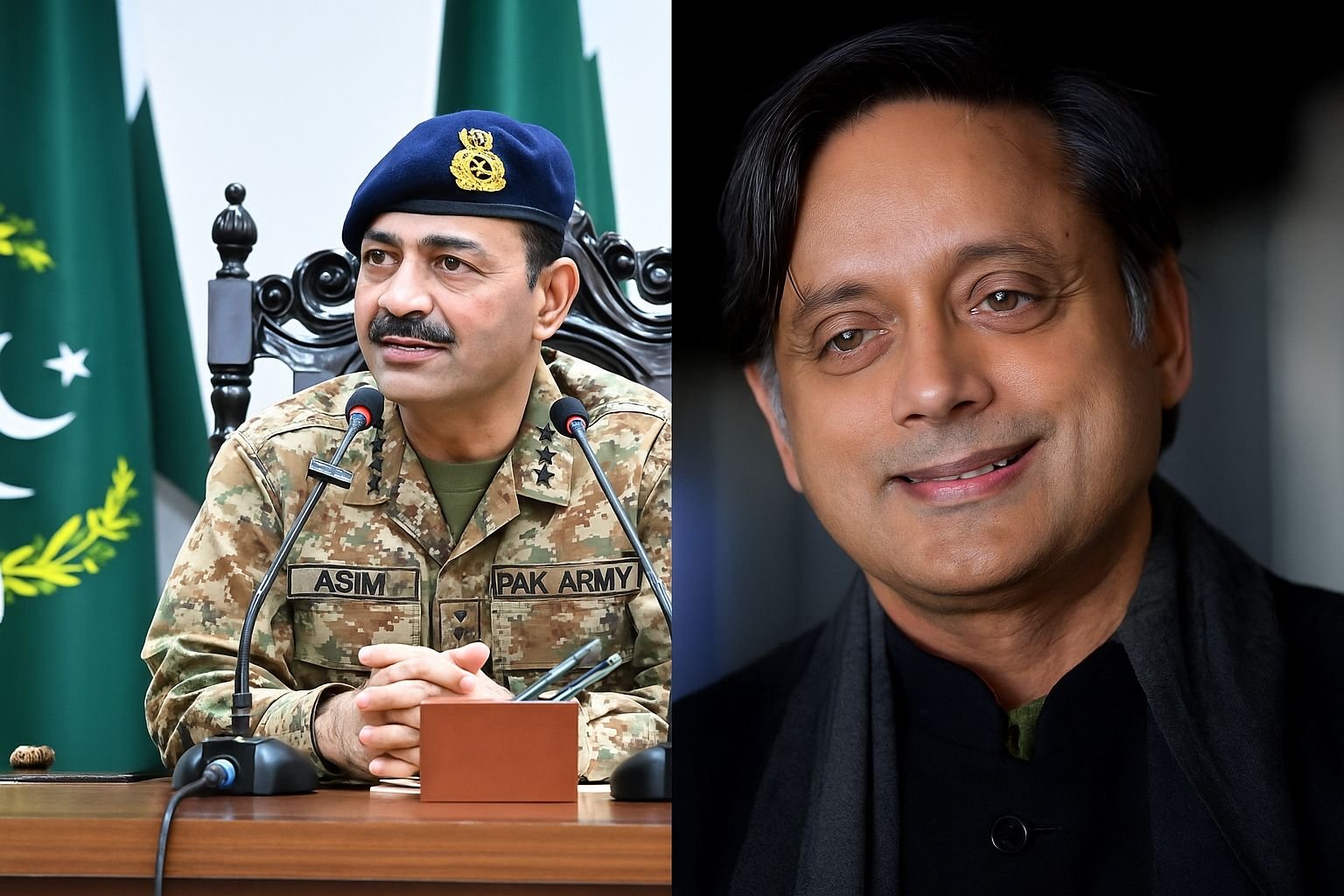
New Delhi, Aug 11 — South Asia’s nuclear rivalry was back in focus on Sunday after Pakistan Army Chief General Asim Munir issued a pointed nuclear warning.
India responded by brushing aside the remarks, calling them a familiar tactic in Islamabad’s playbook.
⸻
Measured Response From New Delhi
Political leaders in India said such rhetoric would not alter the country’s approach to national security.
Congress MP Shashi Tharoor stated the Ministry of External Affairs had already responded effectively, adding that such remarks were aimed at Pakistan’s diaspora and domestic audience rather than signaling any operational shift.
“This gentleman has a habit of saying things… intended to boost his position,” Tharoor said, while stressing that India knows how to address threats “in the air and on the ground.”
⸻
Pakistan’s First Use Policy
Pakistan’s nuclear doctrine allows for a First Use option, meaning the country could employ nuclear weapons even in a conventional conflict if it perceived an existential threat.
This stance is often presented as a counter to India’s larger conventional military strength.
Over the years, nuclear warnings from Pakistani officials have appeared during moments of heightened tension — from cross-border skirmishes to retaliatory airstrikes — serving both as deterrence messaging and political theater.
⸻
India’s No First Use Doctrine
In contrast, India adheres to a No First Use (NFU) policy, committing to use nuclear weapons only in retaliation to a nuclear strike.
This principle is paired with credible minimum deterrence, ensuring enough nuclear capability to deter aggression while avoiding excessive stockpiling.
India has positioned this doctrine as a signal of responsible stewardship, framing its arsenal as a defensive measure rather than an offensive tool.
⸻
You might also like:

A Long Nuclear Rivalry
India’s nuclear journey began with the Smiling Buddha test in 1974, described as a peaceful nuclear explosion.
In 1998, a series of tests cemented India’s status as a declared nuclear weapons state. Pakistan accelerated its own program in response, with its first public nuclear tests taking place shortly after India’s in 1998.
Since then, nuclear tensions have been a constant backdrop to bilateral relations. Major flashpoints — including the 1999 Kargil War, the 2001 Parliament attack, and the 2016 Uri attack — have tested the stability of the region’s deterrence balance. While both nations have engaged in military confrontations, neither has crossed the nuclear threshold.
⸻
Strategic Restraint and Modernization
India has often opted for strategic restraint in response to provocations, preferring conventional military operations and diplomatic pressure over nuclear escalation.
At the same time, the country has continued to modernize its nuclear forces, developing advanced delivery systems such as submarine-launched ballistic missiles to maintain a credible deterrent.
Pakistan has also upgraded its arsenal, focusing on short-range nuclear-capable missiles, which some analysts believe are aimed at countering India’s conventional military doctrines.
⸻
International Perspective
Initially met with sanctions after its 1998 tests, India’s nuclear posture has since gained wider acceptance, particularly following the 2008 Indo-US nuclear deal.
India continues to advocate for global nuclear disarmament while declining to sign the Nuclear Non-Proliferation Treaty (NPT), arguing that reductions must be universal and non-discriminatory.
Pakistan, meanwhile, has linked its own nuclear restraint to progress on broader regional security issues, maintaining that its arsenal is a defensive necessity.
⸻
Current Outlook
The latest exchange of words highlights how nuclear rhetoric remains a recurring feature of India-Pakistan relations.
While Pakistan’s statements serve as both a warning and a political signal, India’s official position remains rooted in deterrence, restraint, and readiness to respond if required.
With both countries modernizing their capabilities, the regional security environment continues to hinge on the ability of leaders to prevent verbal sparring from escalating into strategic miscalculation